Why Is Natural Wine Cloudy? (And Whether You Should Worry)
That haze in your glass isn't a flaw — it's what wine looks like when nobody strips it bare. Here's what the cloudiness actually is.
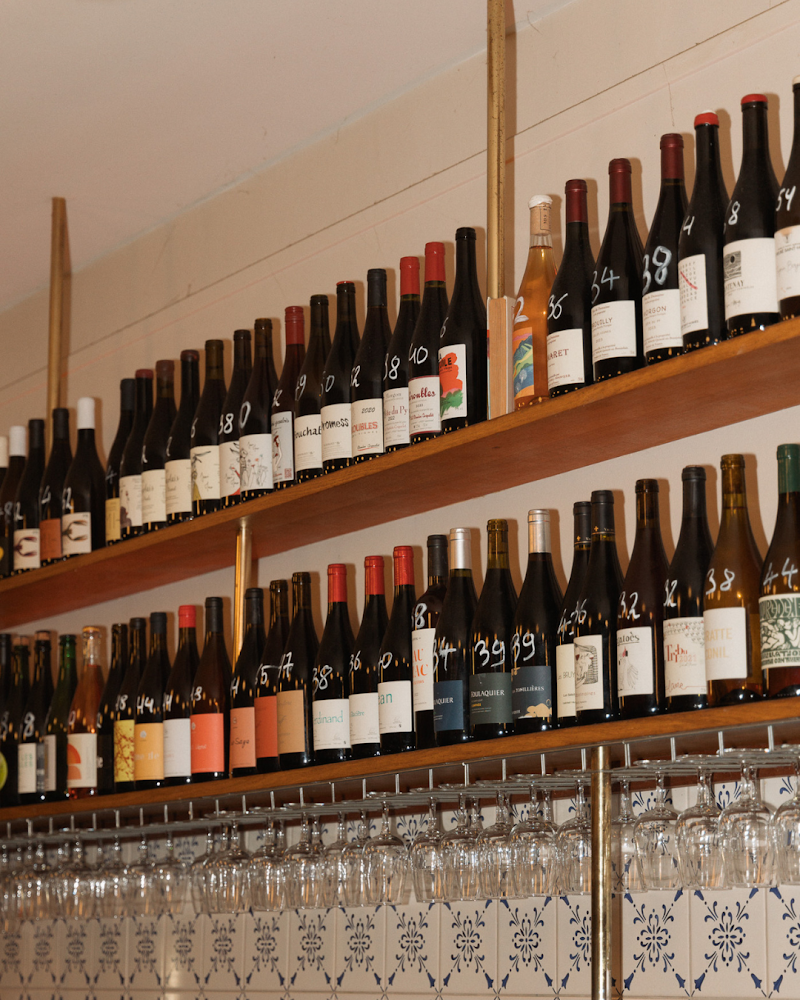
Natural wine is cloudy because it's bottled unfined and unfiltered — the yeast, grape solids, and proteins that conventional winemaking strips out are still in the glass. The haze is suspended matter, not spoilage. It's safe to drink, often adds texture and flavor, and is one of the most reliable visual tells that a wine was made with minimal intervention.
What's actually floating in there: spent yeast cells (lees), fine grape particles, and naturally occurring proteins and tannins. Conventional wine removes them with fining agents — egg white, casein, bentonite clay — and tight filtration, mostly for cosmetic stability. Filtration makes wine bright and shelf-stable; it also strips aroma, texture, and some of the wine's living character. Natural winemakers skip it on purpose.
Should you shake it or settle it? Depends on the wine. For most cloudy whites and pét-nats, gently invert the bottle before opening to distribute the lees — that's where the flavor is. For an older unfiltered red with real sediment, stand it up for a day and pour off the top. When in doubt at a bar, just ask; natural wine bartenders love this question.
When cloudiness IS a warning: haze plus a strong vinegar nose, a persistent stale-cracker finish (mousiness), or aggressive unintended fizz in a still wine points to a fault, not a style. The haze itself is never the problem — it's the aromas and flavors riding with it that tell you whether the bottle is alive or broken.
One rule of thumb to keep: clarity tells you about processing, not quality. Some of the greatest wines on earth are crystal clear; some are murky as cider. The cloud just tells you nobody sanded the wine down on its way to you.
What Is Natural Wine? (And How We Prove a Bar Pours It)
Natural wine in one paragraph, why there's no legal definition in most places, and the evidence we need before we call a bar, restaurant or shop natural.
Pét-Nat, Orange Wine, Skin Contact: A Glossary in Plain Words
The words you'll meet on a natural-wine list, each in a sentence or two: pét-nat, orange wine, skin contact, zero-zero, glou-glou, brett, mousiness and more.
How to Find Natural Wine When You Travel
A practical method for any city: where to look, how to tell a real natural-wine list from a label on the door, the words to ask for, and what to check before you go.
Want to discover the bars we're talking about?
Explore barsNewsletter
Get the next crawl
New proven places, events and wine fairs. About twice a month.