The Beginner's Case: 10 Natural Wines to Start With
Ten bottles that teach you the whole spectrum — from juicy Gamay to Georgian amber — and the producers to look for on any list.
If you're new to natural wine, the fastest way in isn't reading — it's drinking a spread wide enough to find your own edges. Here are ten bottle types to start with, each teaching a different lesson, with producers worth looking for. Think of it as a case that doubles as a curriculum.
1. Beaujolais Gamay — the gateway
Start here. Light, juicy, chillable, impossible to dislike. Look for Jean Foillard, Marcel Lapierre, or Yvon Métras — the Beaujolais growers who arguably started modern natural wine. Lesson: red wine can be refreshing.
2. Loire Chenin Blanc — the mineral one
Dry, textural, faintly waxy, built to age. The Loire is natural wine's other homeland. Lesson: white wine can have structure without oak.
3. A Loire pét-nat — the party trick
Gentle fizz, low alcohol, slight cloudiness. Pét-nat predates Champagne and is far more fun. Lesson: bubbles don't require a method or a ceremony.
4. Friulian skin contact — the education
An orange wine from Friuli: Radikon or Gravner, the two producers who revived the style in Italy. Tannic, amber, savory. Lesson: white grapes can make something closer to a red.
5. Georgian qvevri amber — the origin
Thousands of years of history. Look for Pheasant's Tears or anything Rkatsiteli fermented in clay. Lesson: none of this is new.
6. Etna red — the volcanic one
Frank Cornelissen's Munjebel or Susucaru, from the black slopes of Sicily's volcano. Saline, wild, unmistakably somewhere. Lesson: terroir is not a marketing word.
7. Austrian field blend — the charmer
Gut Oggau's bottles (each named like a family member) are the friendliest serious natural wines made. Lesson: precision and funk aren't opposites.
8. Jura Savagnin — the strange one
Oxidative, nutty, closer to sherry than to Chardonnay. Divisive on purpose. Lesson: oxidation can be a style rather than a fault.
9. A rosé that isn't pink lemonade
Skip the pale industrial stuff. A macerated natural rosé has grip and savor. Lesson: rosé is a real wine when someone treats it like one.
10. Something local you've never heard of
The last slot is the important one: whatever your nearest natural wine shop is excited about this month, from a producer with no international distribution. Lesson: the scene is a living thing, not a canon.
How to actually buy this
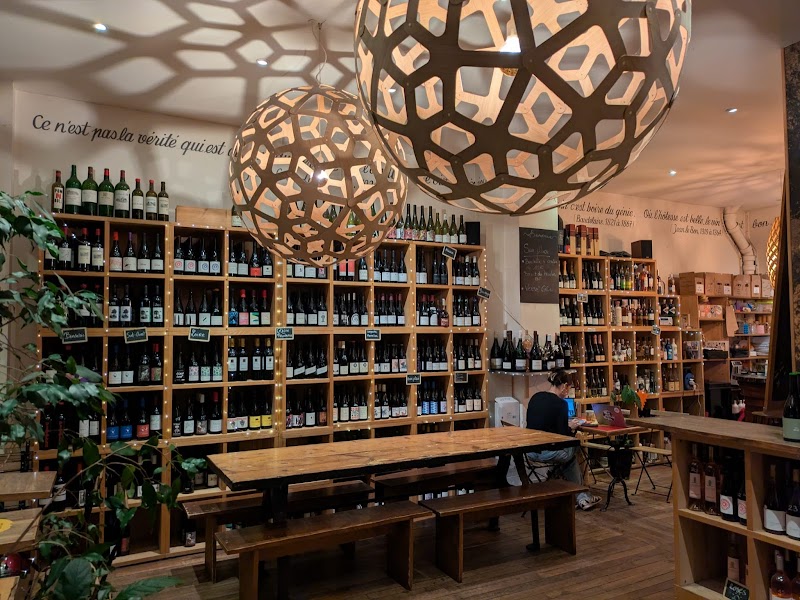
Don't order all ten online. Walk into a natural wine shop or bar, name two or three of the producers above, and ask what they'd pour you next — naming a real grower is the fastest way to signal you're serious and get a genuine recommendation. Find a shop or bar near you, and use the glossary when a label confuses you. It will.
What Is Natural Wine? (And How We Prove a Bar Pours It)
Natural wine in one paragraph, why there's no legal definition in most places, and the evidence we need before we call a bar, restaurant or shop natural.
Pét-Nat, Orange Wine, Skin Contact: A Glossary in Plain Words
The words you'll meet on a natural-wine list, each in a sentence or two: pét-nat, orange wine, skin contact, zero-zero, glou-glou, brett, mousiness and more.
How to Find Natural Wine When You Travel
A practical method for any city: where to look, how to tell a real natural-wine list from a label on the door, the words to ask for, and what to check before you go.
Want to discover the bars we're talking about?
Explore barsNewsletter
Get the next crawl
New proven places, events and wine fairs. About twice a month.