Why Does Natural Wine Taste Funky? The Actual Science
Barnyard, kombucha tang, cider notes — the funk in natural wine has real chemistry behind it. Here's what's actually happening in the bottle.
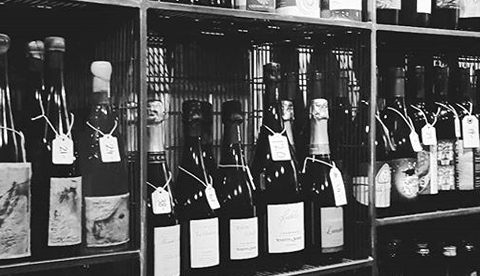
Natural wine tastes funky because natural winemaking removes the safety nets. Spontaneous fermentation, minimal sulfites, and no fining or filtering leave living microbes and volatile compounds in the bottle — the same things conventional winemaking is designed to strip out. Each one has a signature.
Brettanomyces is the famous one. It's a wild yeast that lives on grape skins and in cellars, and it produces compounds that read as barnyard, leather, smoked bacon, or band-aid. In small doses it adds savory depth — some of the most classic reds in France carry a whisper of brett. When it takes over, it flattens everything else.
Volatile acidity is the tang. Acetic-acid compounds give a kombucha edge, a balsamic note, a lift. Every wine has some; natural wine has more, because nothing suppresses the bacteria that produce it. A little is energy. A lot is vinegar in progress.
Native yeasts are the wildcard. Commercial yeast strains are selected to ferment predictably and cleanly. Wild yeasts — dozens of strains working in sequence — produce stranger, more site-specific aromatics. This is the heart of the funk, and the reason two barrels from the same vineyard can smell different.
Skin contact adds grip and umami. Orange wines ferment white juice on the skins for days or months, extracting tannin and flavors — black tea, dried apricot, cheese rind — that people often read as funk even though they're a deliberate style choice.
Then there are the conditions: no filtering keeps yeast and bacteria in the bottle, low sulfites let them keep working, and the wine literally continues to evolve after bottling. That's why natural wine changes bottle to bottle and month to month. It's not inconsistency for its own sake — it's what alive tastes like.
Want the vocabulary? Our glossary defines every term on the list. Want to taste the spectrum? Find a natural wine bar near you and ask for something wild.
What Is Natural Wine? (And How We Prove a Bar Pours It)
Natural wine in one paragraph, why there's no legal definition in most places, and the evidence we need before we call a bar, restaurant or shop natural.
Pét-Nat, Orange Wine, Skin Contact: A Glossary in Plain Words
The words you'll meet on a natural-wine list, each in a sentence or two: pét-nat, orange wine, skin contact, zero-zero, glou-glou, brett, mousiness and more.
The Beginner's Case: 10 Natural Wines to Start With
Ten bottles that teach you the whole spectrum — from juicy Gamay to Georgian amber — and the producers to look for on any list.
Want to discover the bars we're talking about?
Explore barsNewsletter
Get the next crawl
New proven places, events and wine fairs. About twice a month.